


☝️That’s me reading this piece. Try not to make fun of the voices I try to emulate. Apologies to my dear Stepmother, who is surely spinning in her grave over my brutal version of a North Carolina accent.
Also, I’m sorry for the length. I tried to delete so much, but this one deserved a little more air. I promise to be tighter next month.
The Problem for Men

The backseat of my dad’s burgundy Subaru that October morning held me like a mother’s arms. This was 2016 in Port Orange, a suburb of Daytona Beach, Florida. Cristina and I were to take the shuttle from the Daytona Beach airport to Orlando, where we’d take our flight home.
For Dad, this simple act of driving us anywhere felt like fatherhood, like being a man, even if only for this short distance.
Being a man is a tough proposition lately. Some men I talk to, both as a coach but also as a friend, would prefer not to even think about it, lest they be thought of as “one of those guys.” Whatever that means.
Masculinity makes the conversation even messier. It’s almost impossible to pin down what we mean by it, and yet we still feel like we know something about it. That is, until we try to articulate what we think we know.
However one defines it, masculinity offers a complete package of needs to men (and those who would identify as such). It feels like convenience shopping. The problem is that not every man wants to shop in that store.
I’ve read and listened to so much on masculinity in recent history, my gametes are spinning. This much seems true, though.
There are two dominant paradigms being told to men about masculinity.
Men just need to act more like men.
Men just need to act more like women.
These are fine philosophies for some men, those who resonate with either one, but most of the men I talk to don’t fully resonate with either. We could call these the men in the middle, as my friend Richard DAmbrosio recently dubbed them on the Mindful Masculinity podcast.
These men might pick one side, holding their nose, and hoping for the best. It’s not because they feel like one is better than the other, but one is definitely worse than the other.
Both offer a clear pathway to feeling a sense of wholeness. This is what men want. It’s what all humans want, at least covertly, a perception of wholeness.
Another Way
Wholeness can be discovered through pathways other than masculinity (or femininity), but there’s one alternate path to wholeness that deserves consideration.
The Buddhist definition of suffering can offer a kind of portal into wholeness that’s not obvious at first.
Let me frame this up a little.
Christian Picciolini, the former neo-Nazi who became an activist for peace and deradicalization has very specific criterea for wholeness.
He defined three fundamental needs for humans:
Identity
Purpose
Community
One can find similar themes elsewhere, like psychology’s Self-Determination Theory (SDT), which lobbies for the value of autonomy, competence, and relatedness in our lives.
From the SDT dot-org site:
Conditions supporting the individual’s experience of autonomy, competence, and relatedness are argued to foster the most volitional and high quality forms of motivation and engagement for activities, including enhanced performance, persistence, and creativity.
While SDT offers more authority, it’s a little academic. Picciolini’s list is a gut punch.
For a younger Picciolini, hate groups supplied these three. What’s interesting about these three is that, like any powerful force, they can be leveraged for both good and evil.
One can also find Picciolini’s three in traditional religions, political ideologies, military culture, cults, corporate culture, sports team fanaticism, and self-help frameworks, to name only a few.
Arguably, these could each be pathways to a feeling of wholeness.
Complete package concepts might make for easy shopping, but they can also rob us of a more tailored exploration of our unique experience and needs.
What strikes me most about Picciolini’s list is the weight of purpose. It’s a daunting project for many, one that this coach knows firsthand.
About four years ago, I noticed my copywriting hustle lacked a feeling of purpose, so I set out to complete what we coaches call purpose discovery work.
Whatever method one uses, purpose discovery work is challenging. I studied. I shared. I even cried. (That last one shocked me.) In the end, after many revisions, I had a purpose statement that didn’t represent what I was doing.
To connect deeply with individuals so that we can solve problems together.
I’ve honed it since then, but the initial shock was this: The statement was definitely accurate, and also misaligned with my current path. I had to ask: Do I have the right to pursue this at my current age (47)? And, can I afford not to?
What I found equally interesting was how many people told me that purpose discovery seemed uninviting, if not demoralizing. They couldn’t imagine needing a purpose.
There are at least two ways to interpret this.
Not everyone needs a sense of purpose or…
Those of us without one don’t know what we’re missing
What makes masculinity so alluring to some is that it offers a complete package of identity, community, and purpose. Complete package concepts make for easy shopping, but they can also rob us of what else is discoverable.
Case in point, the purpose Picciolini discovered in hate groups was easily replaced by a deeper sense of purpose found outside those groups. Clearly, we can assemble our feeling of wholeness from a variety of sources. We needn’t feel limited to big-box concepts like masculinity.
For men in the middle, neither masculinity nor its rejection offers the wholeness they seek anyway. So what could?
It came to me on about day four of my first ten-day silent retreat.
It hit me so profoundly, I had to stop walking and hunker into a ball so I could focus on the flow of thoughts. What I realized in that moment would stay with me far beyond the retreat.
Waking Up
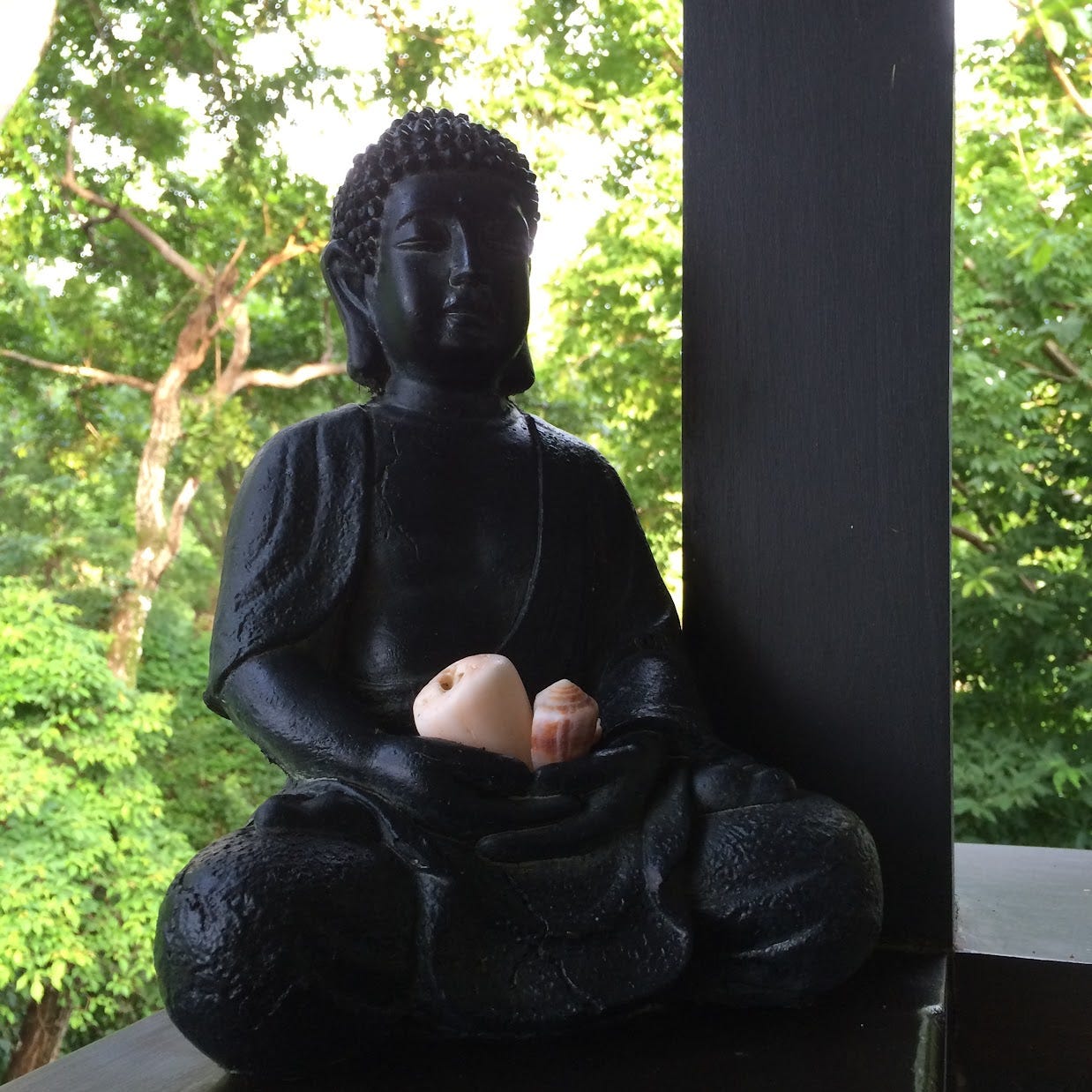
Meditation is a trend that won’t be unfamiliar to most readers. If you’re not presently meditating, you keep saying, “I gotta check it out.”
The promises of meditation vary across schools, but usually include insight, calmness, confidence, and depth of character. Wholeness is rarely mentioned, but this is what I found from my time invested in the practice, specifically what came from my first retreat.
What I tended to perceive as attacks from other people was really emotional shrapnel from their emotional explosions, born of their ignorance about how they were suffering. I was not their direct target, but collateral damage.
We’d spent the first three and a half days in a method called Samadhi, which is a deep kind of focusing work. In this school, we’d sit for over ten hours a day focused on the feeling of the breath as it exited the nostrils. In session with the lead meditator, we’d report out on how long we could hold our attention on the breath.
“Five minutes” was the most common response from the people in my group. This, by the way, was one of the only time where we could speak, and only directly to the proctor.
By day three, five-minute report-outs fell to 30 seconds. For my own part, I’d noticed that I could focus for about 2 whole seconds. That’s when the brain would produce the thought, “Hey! I’m doing it. I’m NOT thinking!”
[insert: eye-roll]
After three and a half days and many lessons from the founder, on a daily walk after lunch, I became aware that all of my thoughts were part of a tireless sorting mechanism. This sorting was being applied to every single object arising in awareness. Every sound, sight, smell, sensation, taste, and mental formation (thought or feeling) was subject to a kind of arbiter in the brain.
The brain had two basic reactions:
Like it
Don’t like it
Some objects even seemed to have more than one reaction, as if from different parts of the brain. These arising reactions were endlessly causing me to feel the urge to change circumstances to better suit my preferences.
What I was discovering through observation was what the Buddhists call suffering. It’s how we wish circumstances were different than what they actually are.
To better illustrate what I mean, I’ve borrowed this bit from my last Substack, Why I Prefer Conscientious Confrontation:
In Buddhism, suffering is distinct from how we bucket pain and suffering into one cauldron in the West. Suffering to Buddhists is how we wish circumstances were other than they are. It often follows pain, but it isn’t the same.
The range of ways we experience suffering is wide open.
I’m cold. I don’t like it. I want it warmer.
This person is annoying. I wish they’d go away.
I hate how I am.
It was immediately clear to me that what was happening to me was a matter of experience. Over time, that experience forged a kind of paradigm that wasn’t present before the retreat. I realized that this brand of suffering was also going on for everyone else.
What I tended to perceive as attacks from other people was really a kind of shrapnel from their emotional explosions, born of their ignorance about how they were suffering. I was not their direct target, but collateral damage.
Applied Learning

Back in my life after the retreat, I noticed something about our annoying neighbor. She was and is still someone who can’t resist the urge to complain about every single aversion in her life. She makes sure the whole world knows.
What became clear to me was that her behavior, something I’d previously found intolerant, was no longer something I perceived as an attack. Her complaining was actually an external manifestation of her suffering.
She wasn’t doing this to me. She was doing it to herself, isolating herself by driving others away with her constant victim narrative.
What’s worse? She was powerless to change this about herself, and I was not the person to save her, not at that time. But I could operate from a place of compassion. After all, she wasn’t really doing anything to me.
This one insight, the Buddhist concept of suffering, had opened a doorway into something I could not… unsee. Falling into a state of greater compassion seemed inevitable. It also felt liberating.
For a long time, I’d wanted a compassion practice, but had no clue how to embody it. Until then, compassion always felt like a white-knuckled exercise of bullshitting the world. Waking up to my own suffering brought me into a state of wholeness that the religion of my parents never delivered.
Important to me, it didn’t require me to onboard any spooky beliefs or become a Buddhist. To this day, I don’t consider myself one, not even a secular one.
From the awareness of one’s own suffering can arise wholeness, which can give rise to connection, curiosity, compassion, confidence, and many other virtues that don’t necessarily begin with the letter “C,” like purpose.
A Different Paradigm

Speaking of c-words, it was connection and curiosity that drove my stepmom to ask about my meditation practice that October morning.
“So, when ya’ll meditate, who do you meditate to?” she asked in her most innocent North Carolina tone, adding, “Or what… how does it work?”
She and my dad were strong in their faith, as they would put it.
“Buddhism,” I answered with a little smile, aware that I was wading into murky water, “doesn’t really deal with the concept of god.”
The subsequent pause hung so heavy, I swear the fuel gauge dropped a quarter mark.
“Okay…?” replied Helen, already confused.
“We practice something called Vipassana meditation,” I explained. “The point is to simply observe what unfolds in each moment.”
She perked up when I added that “Christianity has forms of meditation, as I understand it.” I don’t know them, but I’ve been told by Christians this is true.
But that was about it for her. The absence of a patriarch at the center of a religion didn’t make much sense to Helen. In her world, religion was about the man upstairs, if not the sacrifice of his only begotten son. Otherwise, what’s the point?
Fair, if that’s all one has ever known.
The idea that Buddhism doesn’t have a god makes no sense to someone who has never known otherwise. And yet, it’s a 2600-year-old religion. Some folks argue that it’s not a religion, it’s a teaching.
To those folks, I like to point out that Jesus probably didn’t have gold leaf, marble, and stained glass in mind when he gathered his disciples. The man known as Siddhartha Gautama (the historic Buddha) probably didn’t pine for what came of his teachings either. I sometimes smile, imagining these two commiserating in the afterlife.
But back to Helen’s confusion.
When we’re confronted with a paradigm that doesn’t match the template we’ve grown accustomed to, we can struggle to understand. For my stepmom, there was no way into the concept of Buddhism.
This is the invitation I wish to extend to the men in the middle.
Similar to how Buddhism doesn’t deal with the concept of god, Men do not need to deal with masculinity to find a meaningful way of being in the world. The middle way in this context is refusing to play along.
We don’t need to act more like men or women. We can come into a feeling of wholeness outside these limited (and freighted) views.
Many Paths to Wholeness
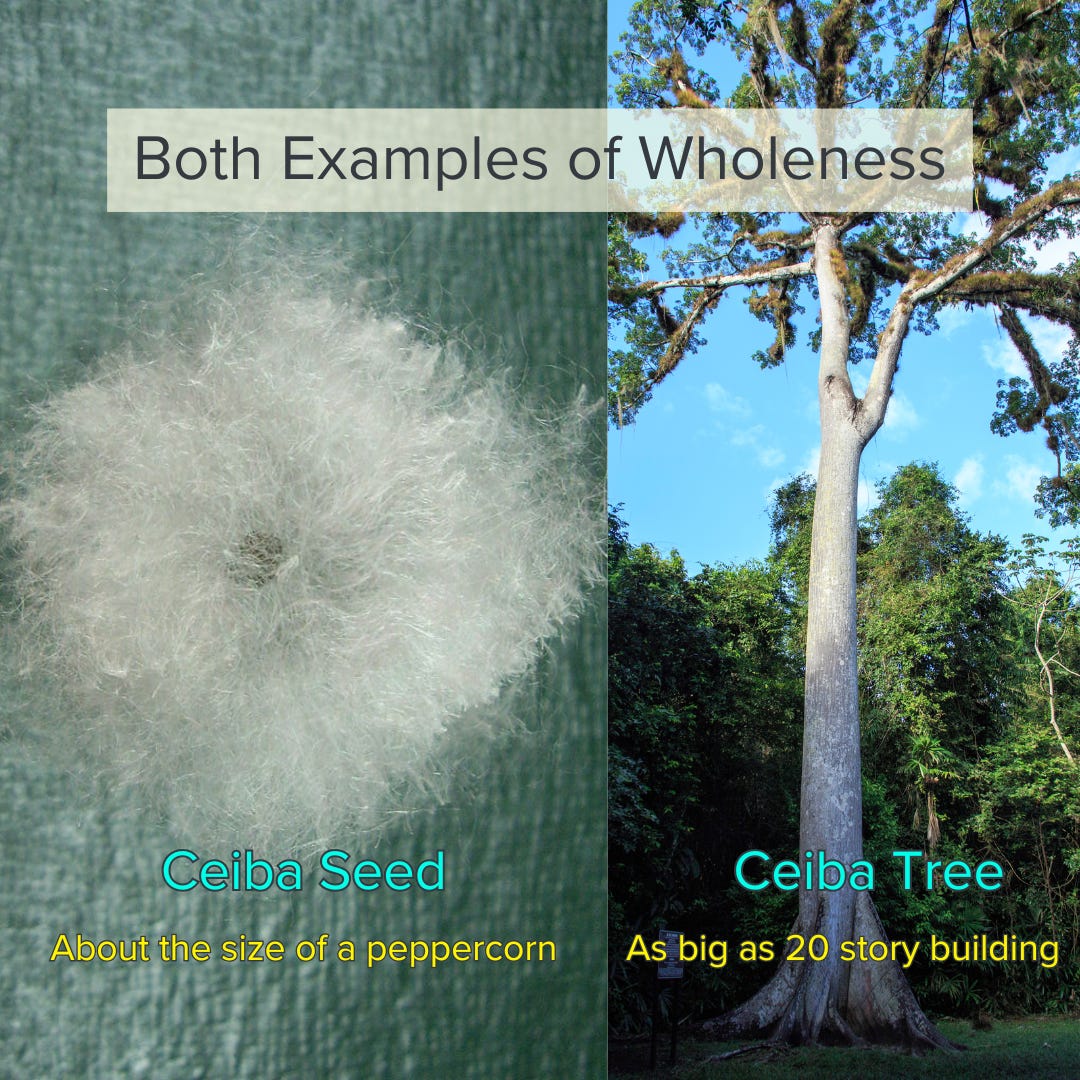
Buddhism is not the only alternative. There are endless pathways to wholeness. Stoicism has enjoyed some of the spotlight in this regard.
Heck, living the life of a cowboy could also work.
If you’ve had the chance to watch the Paramount series, Yellowstone, you might recall this scene. With a greater dramatic flourish, it captures the spirit of what I felt when I woke up on that retreat.
This is from the Yellowstone Season 4 finale, “Grass on the Streets and Weeds on the Rooftops”:
Jimmy: I know who I am now. Or at least what I want to do and who I want to do it with.
Lloyd: What do you want to do?
Jimmy: String together a whole lifetime of days like today.
Lloyd: It’s hard to do.
Jimmy: No. No, it’s hard to do here. This job’s hard enough without having to fight the whole world for the right to do it. Texas… I’m not fighting the neighbor to do my job because he’s got the same job. So does his neighbor. It’s just cattle and cowboys all the way to the horizon.
Clarity of wholeness means we can figure out where we really want to be. It means we can stop fighting the people around us.
Formal meditation is the standard Buddhist pathway, but it’s not the only way. One can simply tune in while people-watching. A few minutes of this can be very instructive.
Sit in a public place and watch people as they struggle against all their unresolved cravings and aversions. You can see it on their faces. You can hear it in their tone.
This is what can also be true, especially if one has noticed how this suffering is messing up their own life. We can see how these people are repelling people with this behavior, and like I mentioned, some worse than others. Some are so repellent, they’re in a constant state of isolation, where nobody wants to be around them.
And like my old neighbor, they can’t figure out why or they can’t figure out how to stop it.
We can realize that these people don’t deserve our judgment any more than they deserve our compassion. We might even realize that the only one hurt by our judgments is ourselves.
There is so much more to be known, but it starts here.
~Damon
As a woman reading this, I found myself bobbing my head up and down, not because I understand masculinity, but because the longing you describe isn’t just male. It’s human. That longing for clarity and wholeness. It’s just that men are often handed fewer tools and worse metaphors to deal with it.
When I read this, I also think about immigrant narratives.
The pressure to become something, quickly and convincingly, to survive. To package yourself in ways that make sense to others. And the deep cost of that, how often the self is traded for safety. Different context, similar pattern. Masculinity, too, can become a performance for survival.
"The most terrifying thing about freedom is the realization that no one is coming to save you."
I felt that in my bones. But maybe that’s also the turning point. The birth of agency, perhaps?
This was too fucking good not to read right now. Just stunning, Damon :)
Happy Thursday!
I only want the kind of masculinity that rides unicorns.